
Tsinghua University releases First University-Wide AI Framework
“Tsinghua University Guiding Principles for the Application of Artificial Intelligence in Education” (Guiding Principles) has been recently released [December 2025] as the institution’s inaugural comprehensive framework. It provides systematic, multi-tiered guidance and standards for AI utilisation across the campus.
Ethics & Proper Usage
As generative artificial intelligence becomes more popular in educational settings, students are utilising AI to enhance learning and generate innovative concepts, despite rising concerns around mental stagnation and dependence on technology. Faculty members are investigating innovative methods to incorporate AI into teaching while addressing ethical considerations and proper usage. The Guiding Principles are categorised into three sections: General Provisions, Teaching and Learning, and Theses, Dissertations, and Practical Achievements. Collectively, they offer a comprehensive framework with specific, scenario-oriented principles that cover essential elements of teaching and academic research.
Wang Shuaiguo, Director of the Online Education Centre and principal drafter of the text, indicated that the Guiding Principles also allow significant scope for future advancement. The architecture is intended to facilitate future expansions into academic research, administrative services, and other developing uses, beyond existing teaching and research contexts.
Five Fundamental Principles
“We hope this will not become a document that restricts innovation. It should be a living system—one that continues to grow as the technology evolves,” said Wang. The General Provisions section delineates Tsinghua University’s robust yet prudent stance on artificial intelligence, articulating five fundamental principles: responsibility, compliance and integrity, data protection, prudence and critical thinking, and fairness and inclusion. These concepts underscore that AI should function as a supplementary tool, with educators and learners as the primary agents of instruction and education.
The framework mandates appropriate disclosure of AI utilisation, forbids academic dishonesty, and prevents the use of sensitive or unauthorised data in the training or operation of AI models. It advocates for attention regarding AI-generated inaccuracies and emphasises the necessity of multi-source verification to avert cognitive complacency stemming from excessive dependence on technology. The guidelines emphasise the necessity of tackling algorithmic bias and the digital divide, ensuring that AI development and implementation benefit the public interest.
The Teaching and Learning section recommends that instructors specify the appropriate use of artificial intelligence in accordance with each course’s objectives, clarify the Guiding Principles to students at the semester’s commencement, and assume accountability for any AI-generated instructional materials. The recommendations additionally urge professors to assist students in cultivating a critical and comprehensive understanding of AI. Students may utilise AI as a learning resource within the confines of the course; however, they are expressly forbidden from duplicating or mechanically rephrasing AI-generated text, code, or other materials for academic submissions.
The Theses, Dissertations, and Practical Achievements section underscores that artificial intelligence should not supplant the academic preparation or independent intellectual endeavours expected of graduate students. The utilisation of AI for ghostwriting, plagiarism, fabrication, or any other type of misconduct is expressly forbidden. Supervisors are mandated to offer explicit direction regarding proper AI use and to exercise oversight during the research process to preserve academic integrity and guarantee the originality of students’ work.
Fostering innovation
Tsinghua University’s Guiding Principles are designed to foster innovation rather than impede it, demonstrating a thorough examination of AI’s growing influence in education and an endeavour to establish a collective academic agreement. Innovative tools like AI-driven courses, knowledge engines, instructional agents, and campus assistants have prompted new enquiries around ethics, accountability, and authorship in education and research. In the summer of 2024, the university commenced the formulation of the Guiding Principles through collaboration among academic and administrative divisions, seeking to reconcile openness to technology advancement with careful oversight and responsible use.
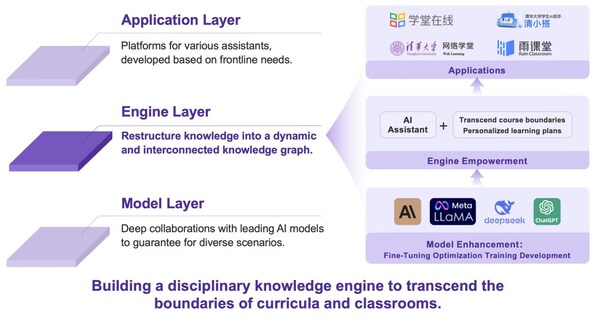
The Guiding Principles launch a new chapter in Tsinghua University’s integration of artificial intelligence and education, shifting the emphasis from technology advancement to institutional support. The effort relies on years of meticulous investigation into AI-enabled instruction. Moving forward, Tsinghua intends to promote the concepts through its AI literacy platform, faculty workshops, and interdisciplinary dialogue. The university’s goal is to guide its community towards ethical and informed AI use, create a sustainable ecosystem for educational innovation, and prepare the next generation to harness and innovate with intelligent technologies.
Picture Source: Tsinghua University