
Beijing’s Second World Humanoid Robot Games
Progress—and Its Limits
On August 22, 2026, the second World Humanoid Robot Games debuted in Beijing, transforming the National Speed Skating Oval—the “Ice Ribbon” erected for the 2022 Winter Olympics—into a venue for machines rather than human athletes. The tournament which runs until August 26,features 666 teams from 16 nations, as well as over 2,000 robots, according to the Beijing local Government. This reflects a significant expansion from the initial games: the number of robots has apparently quadrupled, while the number of teams has increased by 138%.
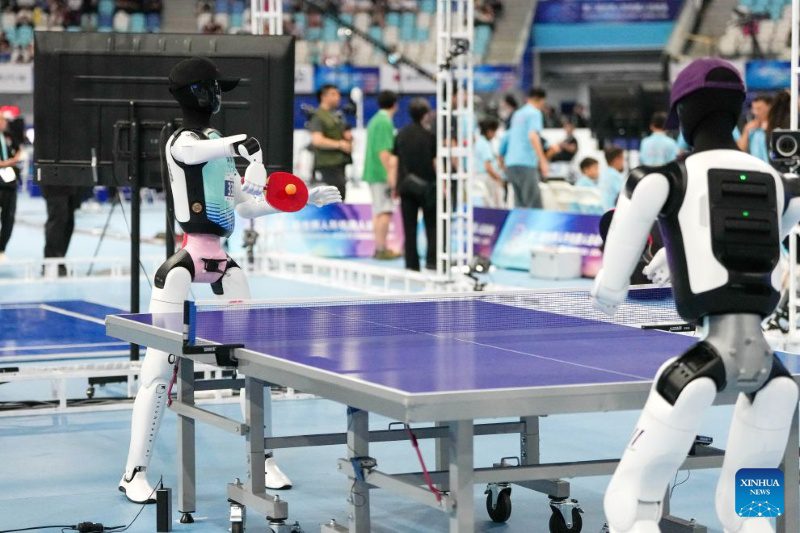
The contest is as much a show as it is a test of practical engineering. Robots are being tested in sprinting, jumping, football, table tennis, weightlifting, tug-of-war and traditional Chinese pastimes such as touhu, or pitch-pot. The football format has developed from three-a-side in the first edition to five-a-side this year, increasing challenges on visual awareness, spatial positioning and collaboration between robots. Other activities test more fundamental but vital skills: balance, strength, manipulation, movement and the ability to continue functioning under physical hardship.
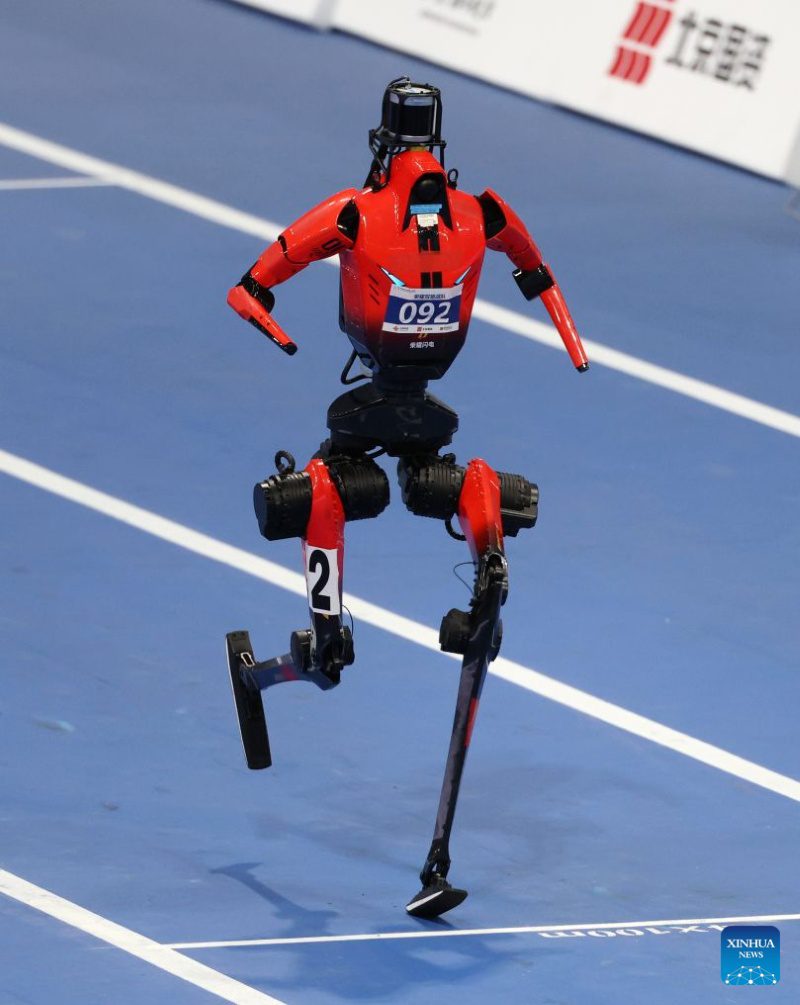
The most extensively publicised outcomes thus far have emanated from the sporting events. A robot from the Tianzhuo team ran a 100-metre race in 9.39 seconds, faster than Usain Bolt’s human world record of 9.58 seconds. Meanwhile another robot is said to have set a new record in the high jump, clearing 2.8843 metres – the previous record holder managed 95.641 centimetres. Some robots achieved long jumps of over seven metres, compared to a winning distance of 1.25 metres in 2025. A robot from smartphone maker Honour had a 9.32-second testing run before the official competition.
These numbers are impressive, but they should be taken with caution. Robot events are not akin to regulated human athletics- the machines vary in design, mass, actuation systems and control methods, and the competitions are primarily designed to compare robotic performance, not to set a new human sporting standard. Still, the results show how swiftly certain teams are upping their speed, power and dynamic balance. They also demonstrate why, in order for robot contests to offer useful comparisons between manufacturers and nations, standardised guidelines and independently verified measurement will become more crucial.
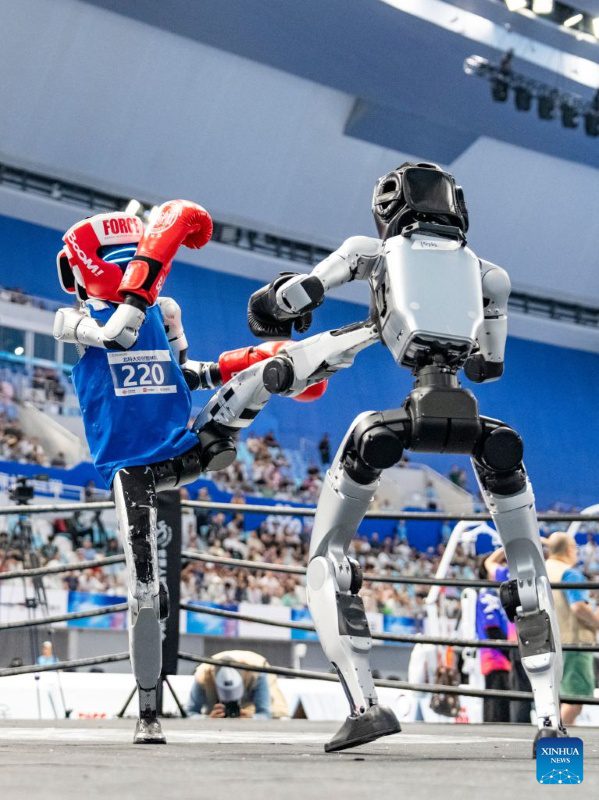
Football and fighting demos may be more telling than headline sprint times. In football, a robot has to sense a changing environment, coordinate movement, recover from disturbances and make judgements in interaction with team-mates and opponents. Some machines crashed or stopped during the 400-metre event and engineers meticulously monitored and cooled robots following races. Such events highlight the divide between a machine that can achieve spectacular peak performance and one that can work dependably for lengthy durations under unpredictable situations.
The events were staged in the same week as the World Robot Conference in Beijing, where businesses showed over 3,000 goods, highlighting China as a key centre of humanoid-robot manufacturing and research. The event is thus both a competition and a public demonstration of industrial ambition. Its longer-term significance will be less of isolated records and more of whether the engineering lessons translate to manufacturing, logistics, transport, healthcare and other real-world situations.
For the time being, the second games appear to be making real improvement, notably in mobility and coordination. They have not yet demonstrated that general-purpose humanoid robots are ready for broad use. The clearest conclusion is more measured -the area is fast improving, but reliability, autonomy, safety, energy efficiency, and usable performance outside controlled settings remain the most important tests.
Picture Source: courtesy of Xinhua News
Shanghai Electric Debuts First Industrial Humanoid Robot “SUYUAN”