
19th Asia Financial Forum 2026 in Hong Kong wraps up successfully
The 19th Asian Financial Forum 2026 (AFF), Asia’s flagship annual financial event, successfully wrapped up (January 27), following two days of high-powered discussions and intelligence sharing involving more than 4,000 business leaders and officials from over 60 countries and regions.
Under the theme “Co-creating New Horizons Amid an Evolving Landscape,” the Hong Kong Special Administrative Region (HKSAR) Government and the Hong Kong Trade Development Council (HKTDC) jointly sponsored the AFF, which attracted over 150 eminent speakers from all over the world. It was especially significant being the first of its kind during China’s 15th Five-Year Plan period (2026–2030).
The AFF served as the inaugural event of the International Financial Week in Hong Kong, involving over 14 partner activities spanning a range of global financial and commercial subjects, including ASEAN that span a wide spectrum of highly watched financial and business subjects, including ASEAN prospects, digital finance, green finance, family offices, private equity and alternative investments.
Global Business Summit
A new Global Business Summit was hosted during day-two of the AFF yesterday, to further integrate finance with important industries and foster innovation and economic development.Co-organised by the Financial Services and the Treasury Bureau of the HKSAR Government, the HKTDC, and the Office for Attracting Strategic Enterprises, the summit investigated how finance empowers businesses. It also discussed how Hong Kong can enable Chinese Mainland firms to “go global”, and the prospects for foreign enterprises entering the Mainland market.
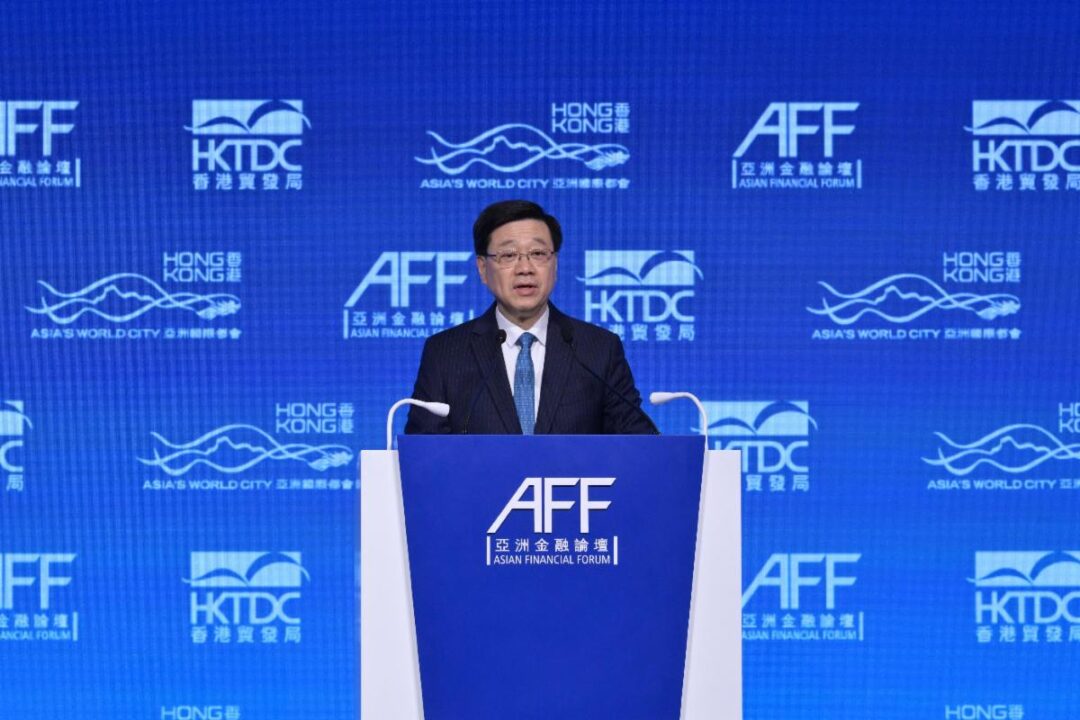
John Lee, Chief Executive of the HKSAR, said in his opening remarks “the Forum will inspire insight and innovation, create partnerships and explore fresh business opportunities.” Mr Lee also spoke of the unlimited prospects for Hong Kong under the unique premise of “one country, two systems”, that assures Hong Kong of the unshakeable backing of China, while continuing to grow its global markets and reach. “Our institutional strengths—the rule of law, an independent judiciary, an open and transparent market, the free flow of capital, and a modest and straightforward tax system—are strengthened by our unmatched stance”, Mr. Lee stated.
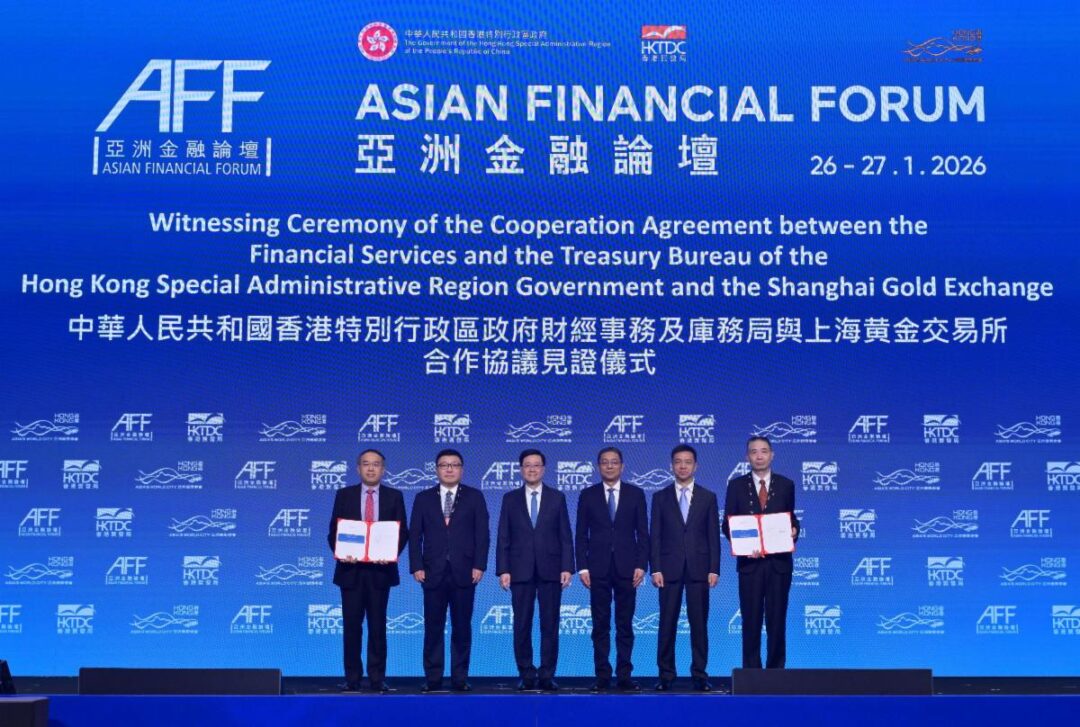
Cooperation Agreement for Hong Kong & Shanghai Gold Markets
Mr Lee later saw the signing of a co-operation agreement between the Financial Services and the Treasury Bureau and the Shanghai Gold Exchange, marking a new milestone in expanding co-operation between the gold markets of Hong Kong and Shanghai.
The agreement was signed by the Secretary for Financial Services and the Treasury, Christopher Hui, and the Chairman of the Shanghai Gold Exchange, Yu Wenjian. “The deal just now reached is significantly more than a legal paper,” said Mr Hui. “It demonstrates a strong commitment to furthering the synergistic development of Hong Kong and Shanghai as key international financial and gold markets. It demonstrates our shared determination to enhance the integration and complementary strengths of Hong Kong and Shanghai, so that together we can extend our share and influence in the global gold market, and better support Renminbi internationalisation.”
Mr Hui underlined the strategic significance of the deal and the broader development roadmap for Hong Kong’s gold market. “In recent years, amid heightened geopolitical uncertainty, inflationary pressures, and continuous reorganisation of the international monetary system, the strategic importance of gold has become even more pronounced,” Mr Hui added.
The agreement covers two significant forward-looking areas of co-operation: establishing a high-level, collaborative governance framework for Hong Kong’s new gold central clearing system; and providing new pathways for physical infrastructure synergy and market interconnectivity. “The signing of this agreement with the Shanghai Gold Exchange symbolises the opening of a new chapter—one in which Hong Kong and Shanghai join forces to determine the future of global gold markets,” Mr Hui added.
Hong Kong as a Strategic Partner
In his opening remarks during the summit, Paul Chan, Financial Secretary of the HKSAR Government, highlighted trade, finance and innovation and technology as the three major drivers of future economic growth. “Hong Kong is not merely a platform that connects finance, market, projects, talent and opportunity. According to Mr. Chan, “Hong Kong is prepared to be a strategic partner to help you grow, scale up, and go global.”
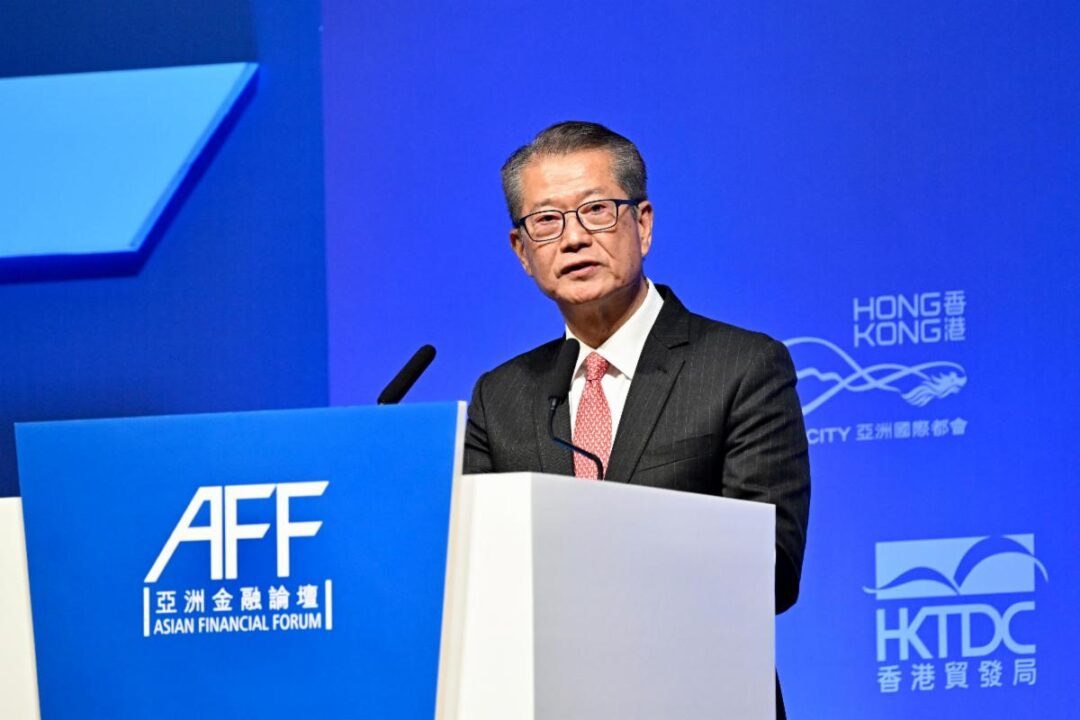
Mr. Chan stated that the HKSAR Government is committed to luring the top frontier-technology companies in the world to establish a presence in Hong Kong in order to create a more dynamic tech ecosystem.We encourage businesses in the technology and industrial sectors to come to the Northern Metropolis. We are ready to customise incentive packages when necessary, which could include tax breaks, premium concessions, land grants, and other facilitation measures. Everything is negotiable,” he remarked.
Prof Frederick Ma, Chairman of the HKTDC, in his welcome remarks at the summit, said: “In these unpredictable times, working together on common goals adds to the agility and resilience of our economy, our industries and enterprises, and our communities. Hong Kong, under the ‘one country, two systems’ framework, is perfectly placed to hold these conversations and foster cross-sector collaboration, as a super connector, super value-adder and super collaborator.”
Sessions
A series of plenary events held during the summit included the Business Plenary I – Chinese Mainland Enterprises Going Global, and Business Plenary II – Strategic Collaboration for Shared Growth, focusing on the current opportunities in global market expansion and incoming foreign investment.
The Global Business Summit also featured a number of discussion sessions addressing high growth, high value industries, including biomedicine and healthcare, green energy, new consumer trends, artificial intelligence and robotics.
Highlights on day one of the AFF (January 26) include a keynote luncheon speech by Dr José Manuel Barroso, former President of the European Commission, former Prime Minister of Portugal, and current Chairman of Goldman Sachs International Advisory Board, to share his insights on the current global landscape and macro‑level challenges.
Other notable speakers included Zou Jiayi, President of Asian Infrastructure Investment Bank; Scott Morris, Vice-President (East and Southeast Asia, and the Pacific) of the Asian Development Bank; Mehmet Şimşek, Minister of Treasury and Finance of Türkiye; Klemen Boštjančič, Deputy Prime Minister and Minister of Finance of Slovenia; H.E. Waleed Saeed Abdul Salam Al Awadhi, Chief Executive Officer of Securities and Commodities Authority of United Arab Emirates; Burkhard Balz, Member of the Executive Board of the Deutsche Bundesbank; Rhee Chang-yong, Governor of the Bank of Korea; and Gokul Laroia, Chief Executive Officer Asia of Morgan Stanley.
Paul Polman, a corporate leader, investor and philanthropist who is dedicated to campaigning for systemic change, climate action, and social equity, delivered the Keynote Luncheon speech on day 2 (January 27). He highlighted his “Net Positive” company sustainability strategy, which he has championed in recent years, focusing on improving sustainable development.
AFF Deal Making
Meanwhile, this year’s AFF Deal-making session, co-organised by the HKTDC and the Hong Kong Venture Capital and Private Equity Association, attracted over 280 investors and over 600 investment projects, resulting in more than 800 one-on-one meetings that successfully connected global capital with investment opportunities.
19th Asia Financial Forum 2026 in Hong Kong wraps up successfully | innovationhongkong
19th Asia Financial Forum held in Hong Kong on January 27, 2026 wrapped up successfully.
Event Type: BusinessEvent
Event Attendance Mode: OfflineEventAttendanceMode
Event Status: EventScheduled
Performer: Organization
Performer Name: HKTDC
Start Date: 2026-01-26 05:54
End Date: 2026-01-27 17:55
Availability: InStock
Availability Starts: 2026-01-26T05:54:00