
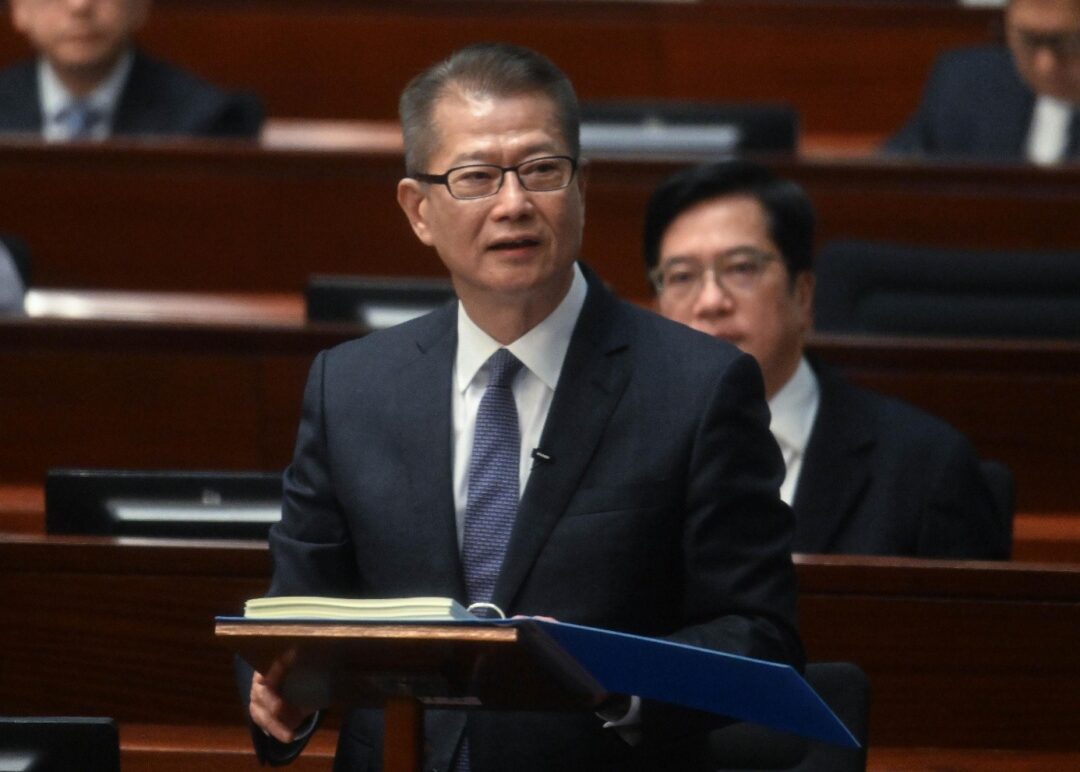
Paul Chan, Financial Secretary delivers HKSAR Government Budget 2026-27
Paul Chan, the Financial Secretary of the Hong Kong SAR Government, presented his 2026-27 Budget on February 25, 2026. The budget includes a variety of initiatives that are intended to proactively align with China’s National 15th Five-Year Plan, support and diversify Hong Kong’s economic growth, accelerate the development of the Northern Metropolis, and promote innovation and technology (I&T).
“Driving High-quality, Inclusive Growth with Innovation and Finance” is the theme of the 2026-27 Budget, the fourth Budget of the current term Government.
Tax
Our tax revenue has increased in the past year due to the thriving economy and capital market. Mr. Chan stated that our public finances have improved earlier than anticipated, in conjunction with the incremental success of the reinforced fiscal consolidation program.
The Financial Secretary disclosed that the Consolidated Account of Hong Kong was anticipated to generate a surplus of $2.9 billion in the current fiscal year, as opposed to the initial projection of a deficit of approximately $67 billion. He stated that the Operating Account for 2025-26, which was initially anticipated to exhibit a deficit of approximately $3 billion, will actually show a surplus of $51.3 billion.
It was also confirmed that the economy of Hong Kong expanded by 3.5% in 2025, and growth is expected to range from 2.5% to 3.5% in 2026.
Alignment with National 15th Five Year Plan
Mr. Chan emphasised the necessity for Hong Kong to actively align with the National 15th Five-Year Plan, which commences this year.He stated that the sustained high-standard two-way opening of our country, in conjunction with scientific and technological innovation, has presented us with new opportunities. “In accordance with local conditions, we must cultivate new quality productive forces and embrace the 15th Five-Year Plan with an innovative mindset.”
Initiatives
Mr. Chan proposed a series of initiatives to facilitate the advancement of I&T, such as the establishment of the Committee on AI+ and Industry Development Strategy, the furtherance of the Sandy Ridge data facility cluster project, the promotion of AI training, and the acceleration of the digital intelligence transformation of the Government.”We are advancing the industrialisation of AI and enhancing its integration across a variety of industries, while simultaneously promoting the broader application of AI, thereby achieving the goal of universal adoption and utilisation,” he stated.
He also stated that the International Clinical Trial Academy will be established to facilitate the globalisation of biomedicine technology in the Chinese Mainland, attract foreign investment, and assist in the transformation of Hong Kong into an international location for health and medical innovation.
The New Industrialisation Elite Enterprises Nurturing Scheme will be launched, and the Budget has allocated resources to establish the first national manufacturing innovation centre outside the Mainland in Hong Kong. This will facilitate the development of new industrialisation.
The Hong Kong Park of the Hetao Shenzhen-Hong Kong Science and Technology Innovation Co-operation Zone and the San Tin Technopole in the Northern Metropolis are among the key infrastructure that the Government will utilise to facilitate the complete integration of technological and industrial innovation.
Hong Kong will proactively align with national development strategies, advance the internationalisation of the Renminbi, and consistently reform the securities market to support financial services.
This year, the government will enact legislation to improve tax regimes for family offices and funds, as well as to establish licensing regimes for digital asset dealing and custodian service providers.Mr. Chan stated that Hong Kong’s financial market has demonstrated resilience and our financial system remains resilient, despite the intricate and constantly evolving external environment. “We will persist in our efforts to enhance market systems and risk control, leverage emerging fields, and enhance financial collaboration within the GBA (Guangdong-Hong Kong-Macao Greater Bay Area).”
Budget Allocation inclusions
The Budget will allocate $1.66 billion (US$212 million) to the Hong Kong Tourism Board (HKTB) in recognition of the 13% year-over-year increase in visitor arrivals that occurred in Hong Kong last year. This increase has generated business and employment opportunities for related sectors.Mr. Chan stated that the HKTB will enhance its flagship events and promotions by introducing new elements and prolonging the duration of the events, as well as organising additional signature festive events to emphasise the uniqueness of Hong Kong’s East-meets-West culture.
The Budget also allocates an additional $1 billion (US$128 million) to the Built Heritage Conservation Fund in order to enhance the cultural heritage of cities. In another location, the Government will establish the Northern Metropolis Urban-rural Integration Fund as a pilot program to provide assistance to rural tourism initiatives.
In order to bolster the development of sports in Hong Kong, the Financial Secretary will allocate $1.2 billion (US$154 million) to the sports sector of the Arts and Sports Development Fund.
Mr. Chan stated that the global environment has remained volatile over the past year, and Hong Kong has continued to undertake economic transformation.The development of AI, in particular, has presented us with a combination of challenges and opportunities associated with technological innovation. Nevertheless, Hong Kong has consistently prospered in the face of change and advanced through innovation. Mr. Chan emphasised the necessity of utilising our strengths and leveraging the unwavering support of our nation to sustainably accelerate and expand our economic development, thereby improving the quality of life and providing better development opportunities for the populace.
Picture Source: HKSAR Government ISD